ny_quant: (Default)
[personal profile] ny_quant
Узнал об этом из дискуссии в дружественном журнале, но забыл пересказать. Вот такая, значит, экологически чистая технология. Информация от зеленого Блумберга, там не соврут.


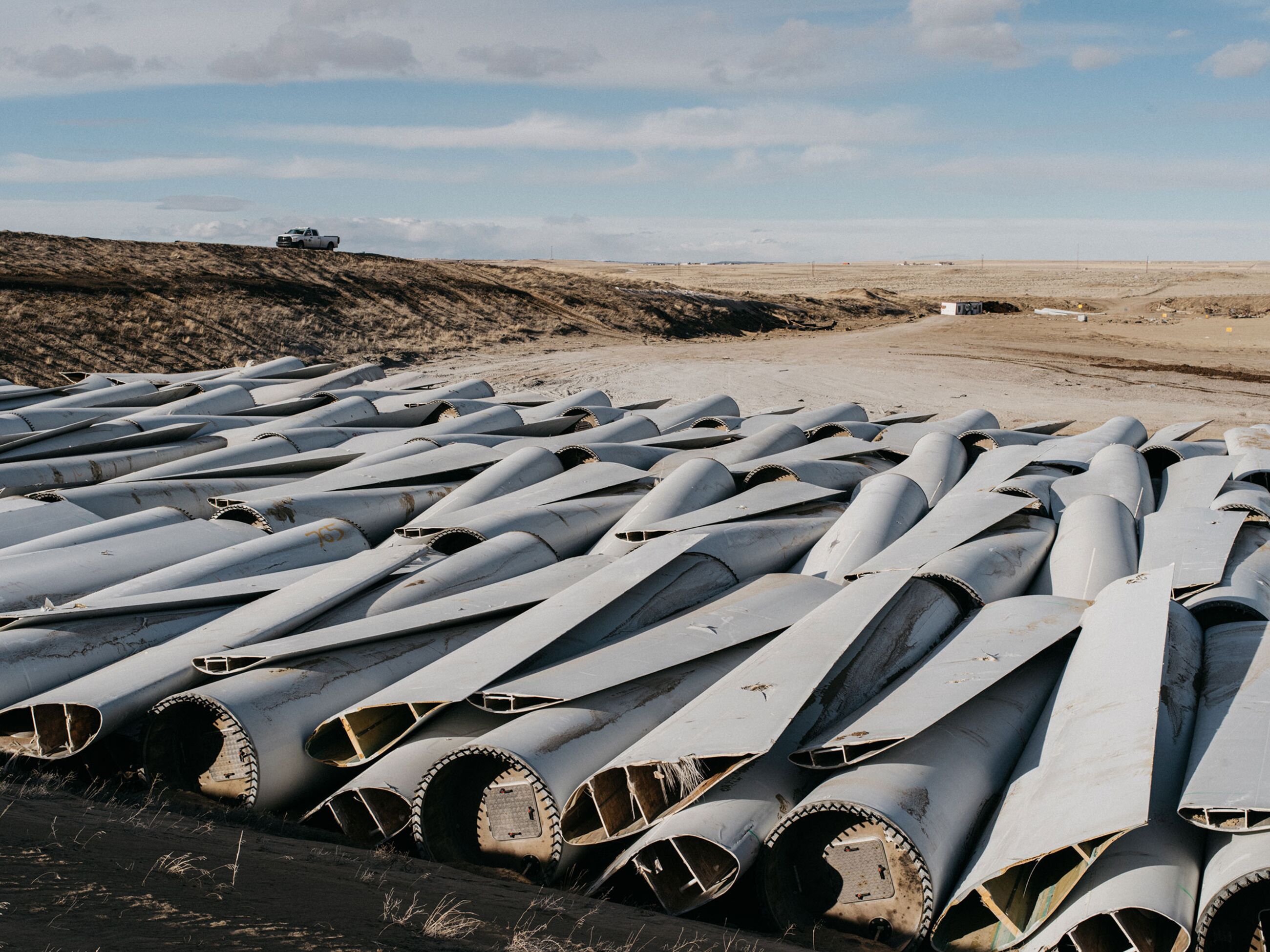
Tens of thousands of aging blades are coming down from steel towers around the world and most have nowhere to go but landfills. In the U.S. alone, about 8,000 will be removed in each of the next four years. Europe, which has been dealing with the problem longer, has about 3,800 coming down annually through at least 2022, according to BloombergNEF. It’s going to get worse: Most were built more than a decade ago, when installations were less than a fifth of what they are now.

Built to withstand hurricane-force winds, the blades can’t easily be crushed, recycled or repurposed. That’s created an urgent search for alternatives in places that lack wide-open prairies. In the U.S., they go to the handful of landfills that accept them, in Lake Mills, Iowa; Sioux Falls, South Dakota; and Casper, where they will be interred in stacks that reach 30 feet under. “The wind turbine blade will be there, ultimately, forever” ... “Most landfills are considered a dry tomb.”

Wind power is carbon-free [не считая процесса их производства и транспортировки, но кто ж считает?] and about 85% of turbine components, including steel, copper wire, electronics and gearing can be recycled or reused. But the fiberglass blades remain difficult to dispose of. With some as long as a football field, big rigs can only carry one at a time, making transportation costs prohibitive for long-distance hauls. Scientists are trying to find better ways to separate resins from fibers or to give small chunks new life as pellets or boards.

In the European Union, which strictly regulates material that can go into landfills, some blades are burned in kilns that create cement or in power plants. But their energy content is weak and uneven and the burning fiberglass emits pollutants. (ну не прелесть ли?!)

[Теперь хорошие новости] One start-up, Global Fiberglass Solutions, developed a method to break down blades and press them into pellets and fiber boards to be used for flooring and walls. The company started producing samples at a plant in Sweetwater, Texas, near the continent’s largest concentration of wind farms. It plans another operation in Iowa. “We can process 99.9% of a blade and handle about 6,000 to 7,000 blades a year per plant,” said Chief Executive Officer Don Lilly.

Date: 2021-03-11 12:22 am (UTC)
From: [identity profile] affidavid.livejournal.com
Они прочные, но распилить их на кусочки покороче (если надо никакой) проблемы не представляет. И стеклопластик, и углепластик пилятся на раз.

Date: 2021-03-11 12:24 am (UTC)
From: [identity profile] misha-b.livejournal.com
Нужна инфраструктура переработки.

Date: 2021-03-11 12:29 am (UTC)
From: [identity profile] affidavid.livejournal.com
Для того, чтобы распилить лопасти на куски покороче для свалки достаточно обычной циркулярной пилы с карбидным диском. Не думаю, чтобы переработка была выгодной, но ежели зеленые накидают бабла выше крыши, то сделать можно.
Date: 2021-03-11 12:31 am (UTC)
From: [identity profile] misha-b.livejournal.com
Если бы было дешевле распилить, то распилили бы, а так отвозят на свалку в целом виде.

Date: 2021-03-11 12:34 am (UTC)
From: [identity profile] affidavid.livejournal.com
На снимке лопасти довольно маленькие, тридцатиметровые пилить точно придется. Просто они пока вертятся.

Profile

ny_quant: (Default)
ny_quant

January 2026

S M T W T F S
    123
45 6 7 8 9 10
11 12 13 14151617
18192021222324
25262728293031

Most Popular Tags

Style Credit

Expand Cut Tags

No cut tags
Page generated Jan. 14th, 2026 11:50 pm
Powered by Dreamwidth Studios